
RISE has been partnering with our Core Network schools for years, learning how to best leverage data, continuous improvement, and our collaborative network to support students in navigating the pivotal middle-to-high school transition. But as a school that is new to the work of helping students stay on-track and prepared to graduate, such a goal may feel lofty and overwhelming. Where do you start and what should you prioritize? This is where RISE’s Freshman Focus Network comes in.
Through the Freshman Focus Network (FFN), RISE partners with schools and districts to strengthen structures, systems, and practices around the Grade 9 transition. The yearly arc of learning includes support for individual schools and the network at large, through gatherings of educators for opportunities to learn, collaborate, and share strategies.
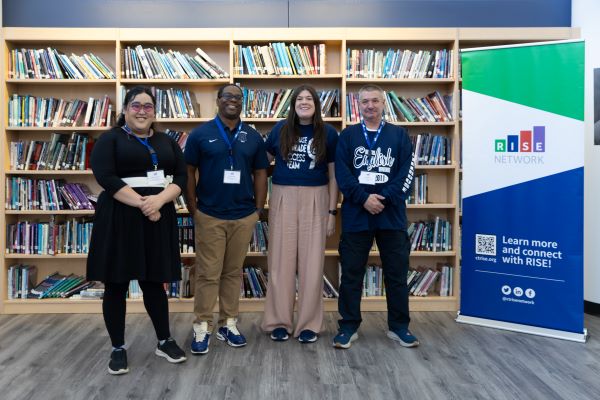
One such opportunity is in the form of a visit to one of RISE’s Core Network schools, which this fall, was Brien McMahon High School in Norwalk. McMahon also belongs to a larger programmatic partnership between RISE and Norwalk Public Schools, which focuses on Grade 9 on-track, as well as postsecondary access and success efforts.
McMahon recently hosted educators from the 20 schools participating in the Freshman Focus Network this year, serving as a demonstration site to showcase proven practices and break down how to put these into place.
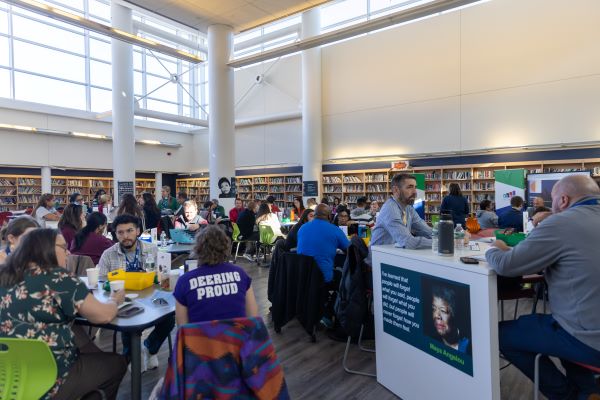
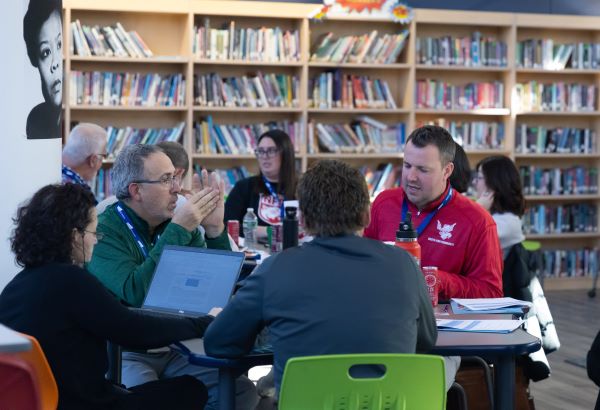
A highlight of the day was a panel discussion with students and educators, who shared their experiences with McMahon’s Grade 9 program and the profound impact of meaningful relationships.
During the panel, 10th-grader Alexis shared that, “when entering high school, the biggest transition was learning to stay on-track.” He reflected that the close relationship he shared with his On-Track Coach, Ms. Jimenez, was invaluable. “She helped me with what to do and what to stay on top of so I could get my credits,” he said. “She’s always in a good mood and her happiness lifts me up.”
Fellow student Tania, who is currently a senior, shared this sentiment. “My On-Track Coach, Mr. Kelley, got me to the point where I could open up and talk about school, as well as real life, including things I may need advice on,” she said. “It makes me excited to come to school and have someone I can talk to. The love I felt from my teachers rubbed off on me, so I want to become an educator. That’s my dream.”
Following the panel, FFN educators participated in student-guided classroom observations, an improvement team fishbowl observation, and a success analysis rotation with five practices spotlighted by McMahon educators.
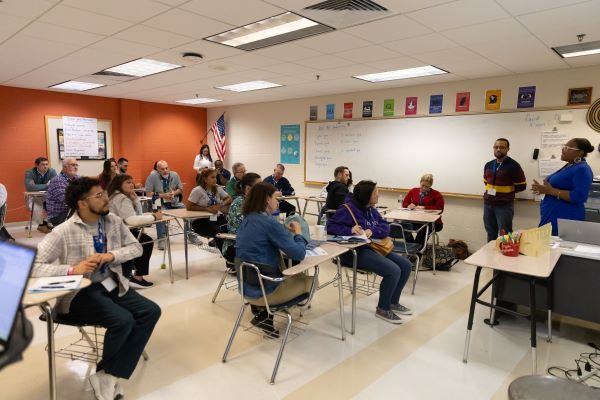
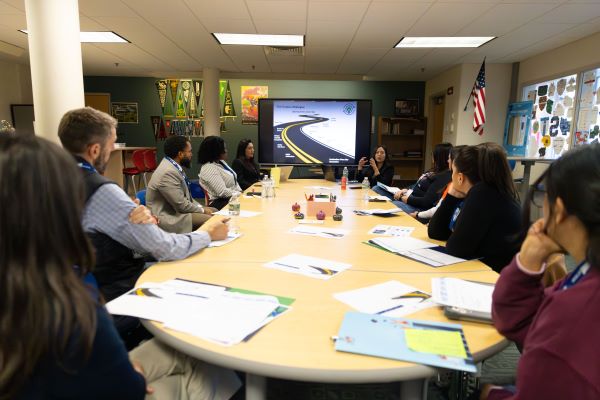
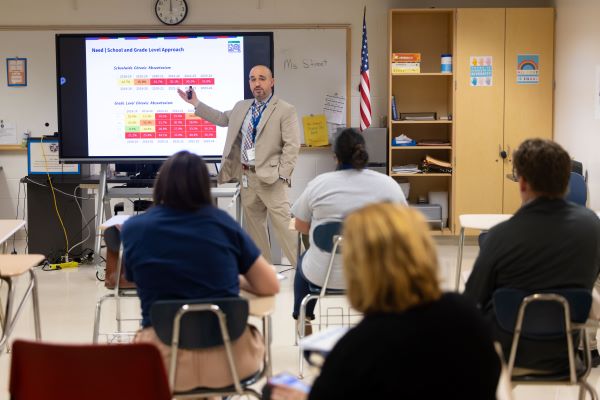
In one session, Assistant Principal LaShante James and School Counselor Chad Southerland shared some of the strategies they have used to build a strong Grade 9 on-track school culture. They explained that their Grade 9 teams meet two to three times a week and use data to plan interventions to help students in need. When students succeed, they are celebrated through events like #Present, a monthly raffle for students with 90% and above attendance rates; and “Keep it Up,” an award presented during progress report periods to recognize students who are on-track. Similarly, they have “Senator Showdowns,” where teams of teachers are recognized for their students’ progress in improving grades and attendance, as well as completing interventions like home phone calls and working with students during dedicated study times. In the end, every student is celebrated in some way and the positive reinforcement yields continuing positive results.
“We want to hone in on engaging all stakeholders to support students who are struggling with the Grade 9 transition,” said Southerland. “The goal of our all hands on deck approach is to make sure that all of our students feel supported.”
Another session, led by Assistant Principal AJ Albano and LEAP Coordinator Brian Acevedo, focused on strategies to address chronic absenteeism at McMahon. In addition to targeted outreach through LEAP, a grant-funded program at the school, Albano shared some of the wide-reaching interventions his team employs, including home visits, access to a school-based health center, raffles for students with high attendance, and maintaining an attendance committee. “There is not one thing we do,” Albano said. “We have a multi-layered approach to reach as many students as possible.”
At the end of the day, FFN educators had gathered valuable insights from the visit to McMahon that they could take back to their schools and adapt to build or bolster their own programs.


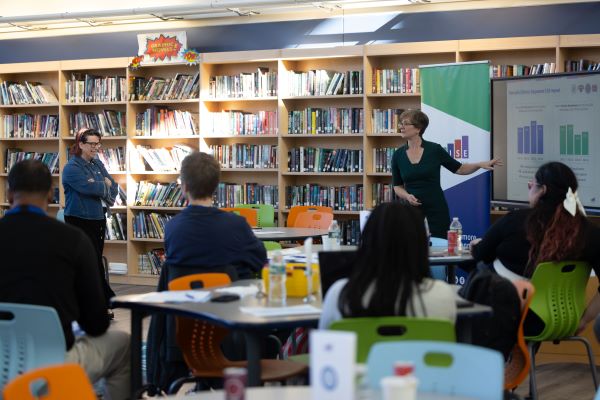
“The advice felt clear, actionable, and attainable,” said Lily Worthington, an educator from Deering High School in Portland, ME. John Staley, Principal at Doherty High School in Worcester, MA, agreed. “There were several specific strategies that can be applied to our school,” he said. “The relevance of these visits is that we can envision ourselves from the point of view of McMahon, several years ago. Their struggles are relatable and their suggestions are realistic.”
The tangible takeaways and sense of community felt by FFN attendees serve as a powerful example of the transformative power of networks.
“This event brought together educators and leaders from schools across the Northeast to share ideas, learn from each other, and explore practical strategies for their schools,” said Peter Lorinser, RISE Deputy Director for Engagement. “As the leader of FFN for the past three years, I was excited to see such collaboration, energy, and focus from attendees, whether they are in their first or third year with our partnership. Real change is happening in each school, making a meaningful impact on the student experience.”