
Across the RISE Network, schools use the R-I-S-E improvement cycle to test new ideas and drive meaningful change for their students. The process starts with the “Review” stage, where teams analyze student data and experiences to pinpoint key needs. In “Innovate,” teams develop a specific, actionable idea to address a problem. During “Spring into Action,” they test it and collect data, and in “Evaluate,” they assess results and refine or scale their approach. It’s all about trying something, learning from it, and using that learning to keep improving.

When educators continuously test strategies, analyze data, and refine their work, small changes can lead to larger, lasting gains for students.
Platt High School: Student Voice Powers Postsecondary Progress
At Platt High School in Meriden, postsecondary educators sought to better understand students’ senior-year experiences and identify barriers to graduation milestones.
Inspired by a network-wide professional learning experience at Naugatuck High School, where a panel of students provided insights about their experiences in a Summer Academy program, the Platt team formulated their change idea: “If we include student voice in the planning and designing of postsecondary programming, then we will see an increase in student buy-in and participation in postsecondary steps.”
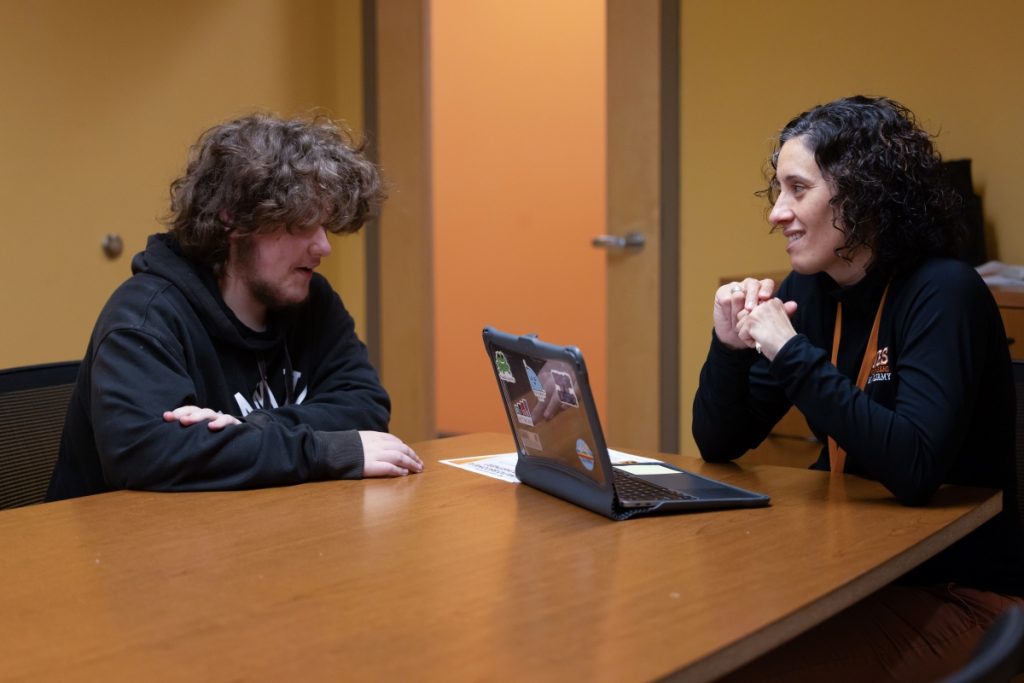
To achieve this, Platt invited 2-4 seniors to participate monthly in their improvement team meetings. Each meeting, they sought input from students following different postsecondary pathways: 4-year-college-bound students who attended Summer Academy (as well as those who did not), students pursuing trade or technical schools, as well as community college-bound students. They gathered information from students, such as their confidence in their chosen plan, challenges and barriers they had completing postsecondary milestones, whether they had the help and resources they needed, and what educators could do to better support them.
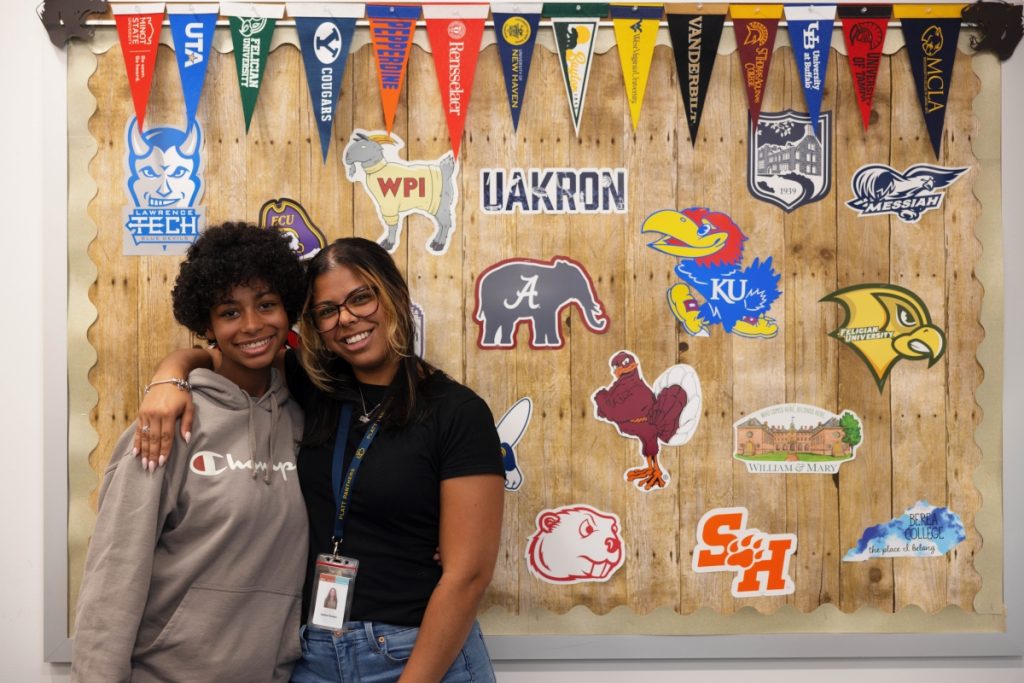
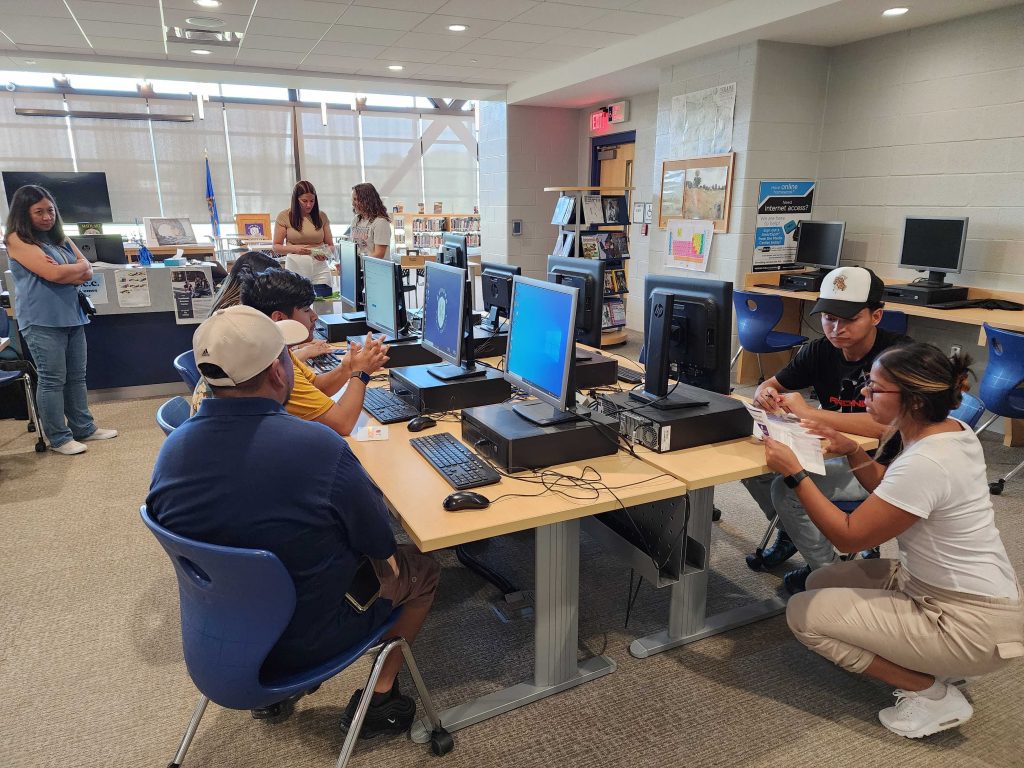

One finding the team uncovered was that Summer Academy was an extremely important resource in students’ journeys; students who attended Summer Academy felt they received the most support and conveyed the highest levels of confidence. On the flip side, they learned that the college essay was most frequently cited as a barrier.
Based on their findings, the Platt team responded immediately to student feedback regarding the essay barrier; the team consulted with the English department lead about how they could improve college essay support for all students, identified community partners like GearUp that could provide support, and held an assembly for juniors where college representatives spoke about the college essay and the Platt team shared the benefits of attending Summer Academy to support their essay development.
“Inviting different groups of students to our improvement team meetings allowed us to identify what has been effective as well as areas upon which to improve,” said Principal Daniel Corsetti. Counseling Director Marc Guidone added, “We decided to involve students in planning events like Senior Signing Day and asked seniors who completed Summer Academy to speak to juniors about the program benefits.”
Through the continuous improvement process, Platt tackled a key postsecondary barrier, affirmed the value of Summer Academy, and created a model to include student voice.
Westhill High School: Pivoting to Address Attendance Challenges
Sometimes, the improvement process is less straightforward, though equally valuable. At Westhill High School in Stamford, the Grade 9 team began the 2025-26 school year with a change idea to improve attendance rates: “If we have restorative circles with students who have been identified as AGR (Attendance Grade Recovery, where a student is identified as being chronically absent in a quarter but with a passing grade), then we will see an increase in Average Daily Attendance rates.”
Westhill On-Track Coach Bryanna Bonner held “restorative circles” where students came together to discuss the importance of attendance. After a few sessions, Bonner noticed that students were uncomfortable sharing with their peers, and so the initiative wasn’t having the desired impact.
So she pivoted to a new idea: “If we utilize the Data Hub weekly to analyze ADA trends, identify students with improved or high attendance, and recognize them through incentives and family communication, such as calls or messages on talking points, then we will see an increase in ADA as families become engaged in attendance success.” This new strategy quickly proved more effective.
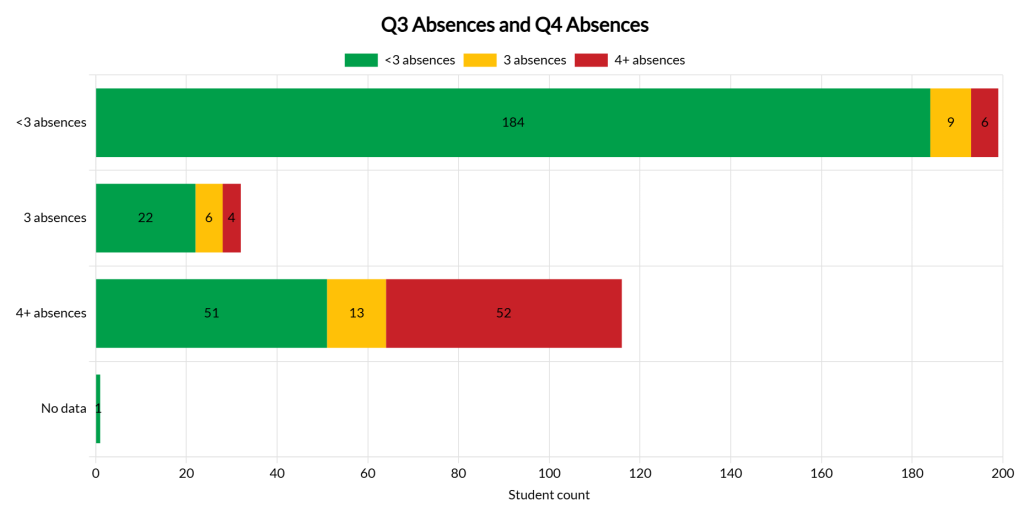
“I shifted to a more proactive approach, reviewing data weekly to catch trends for all students, not just those struggling,” said Bonner. “I made a point to celebrate growth and connect with families.”
This led to better awareness of attendance policies and more family engagement. “My biggest success during this process was students becoming more familiar with our attendance policies and what they needed to do to stay on-track,” Bonner said. “Families were more informed, and parents expressed appreciation for the consistent communication and positive updates about their child.”
Part of the value of pursuing improvement by testing small ideas is the flexibility to adapt when the “Evaluate” stage is not yielding the desired results. The ability to pivot mid-cycle allowed Westhill to adopt a more effective strategy and set the stage to scale it next year.
Weaver High School: Progress, Not Perfection, in Pursuit of Grade 9 Success
At Weaver High School in Hartford, the Grade 9 team aimed to improve attendance through their change idea: “If we address the 34 students who currently have an ADA of 80% or higher but are off track through the strategic use of grade 9 team time, building stronger relationships with students and caregivers, and monitoring progress through actions steps and data then by the end of the year we predict that the 34 students will be on-track.”
They flagged the 34 students in the RISE Data Hub, along with insights from a district-wide student survey. They held student-led conferences to build relationships with students and convey the importance of staying on-track and maintaining strong attendance. They also engaged University of Hartford “math motivators,” student tutors who worked with students to build algebra skills (an identified challenge area). Lastly, Grade 9 Assistant Principal Joshua Hall encouraged a rotating focus on student behavior, attendance, and grades during every Grade 9 team meeting.
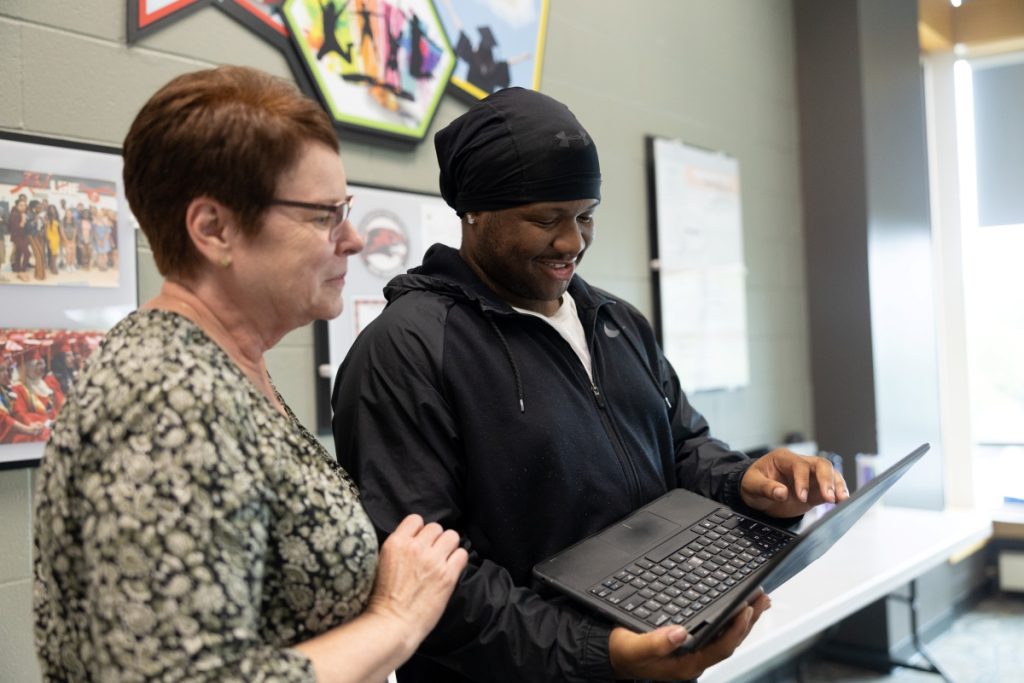

By the end of the school year, 72 percent of the students targeted for additional support were on-track to earn 6+ credits and achieved an average daily attendance rate eight percentage points higher (85.2 percent) than the school’s first-time Grade 9 student cohort (77.2 percent). Though Weaver did not achieve 100 percent success, their change idea led to important takeaways. According to Hall, because of the traction they saw with the small group of students, they are planning to broaden their scope in the year ahead to more effectively move the needle.
“We always hope that things will succeed, but there is so much we can learn when things don’t go exactly as planned,” said Erin Asselin, the RISE School Improvement Coach who partnered with Hall and his team at Weaver. “We can take our learnings and apply them to the next year, using new and innovative strategies to tackle challenges. Being able to experience the full change idea cycle gives us so much to reflect on, which allows us to become better and think differently.”
Putting it all Together: The Power of Continuous Improvement
These stories from Platt, Westhill, and Weaver demonstrate the power of the continuous improvement process in action. Whether a change idea yields strong results, surfaces a new challenge, or takes an unexpected turn, each improvement cycle empowers educators to test incremental changes to improve student outcomes. By centering student voice, using data to guide decisions, and embracing continuous learning, RISE Network schools are turning small ideas into meaningful student impact, one change idea at a time.