
When Worcester Technical High School’s Dean of Students, Edward Walker, first traveled from Massachusetts to RISE’s Grade 9 Symposium in 2023, his goal was simple: find one new nugget that could make ninth grade better for WTHS Grade 9 students. Two years later, he returned to the Symposium not only as a learner but as a leader, sitting on a panel of educators and facilitating a breakout session about on‑track conferences.
Worcester Tech’s journey from curious participant to showcased school captures what the Symposium is designed to do: connect passionate educators across districts and states, surface practical strategies and shared challenges, and elevate the voices of those doing the work.
From First‑Time Attendees to Network Partners
Walker remembers the impact of his first Symposium, sharing that, “The immediate impact of the network was huge. I was exposed to new perspectives, strategies, and professional practices that I could implement back at my school.”
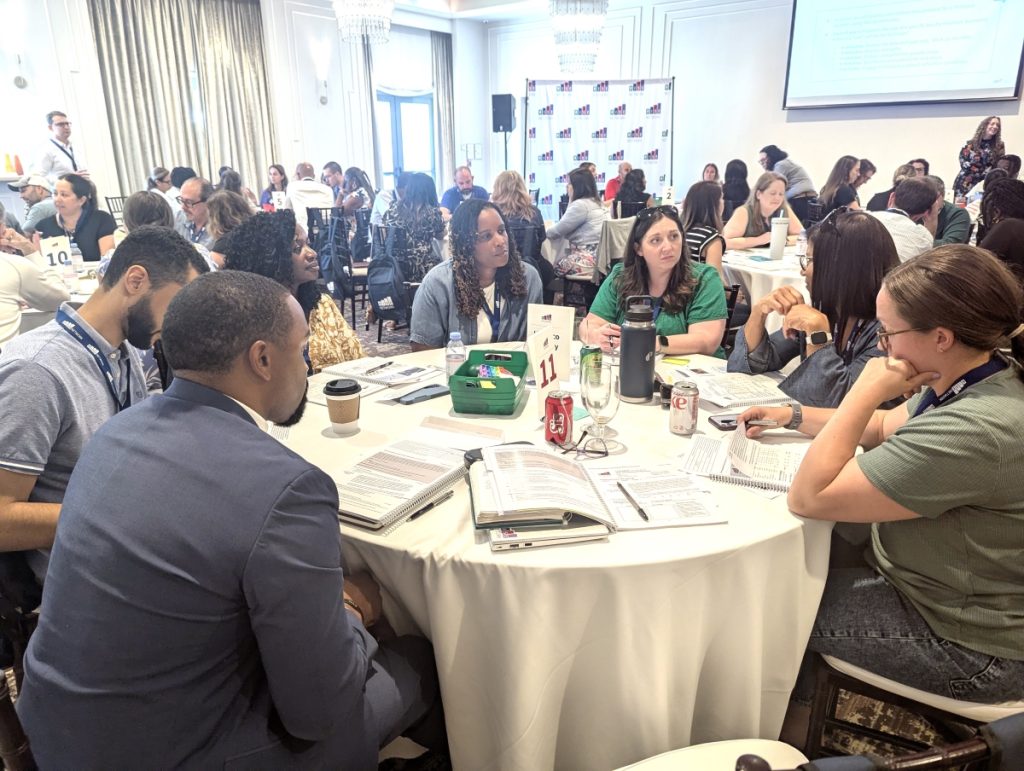
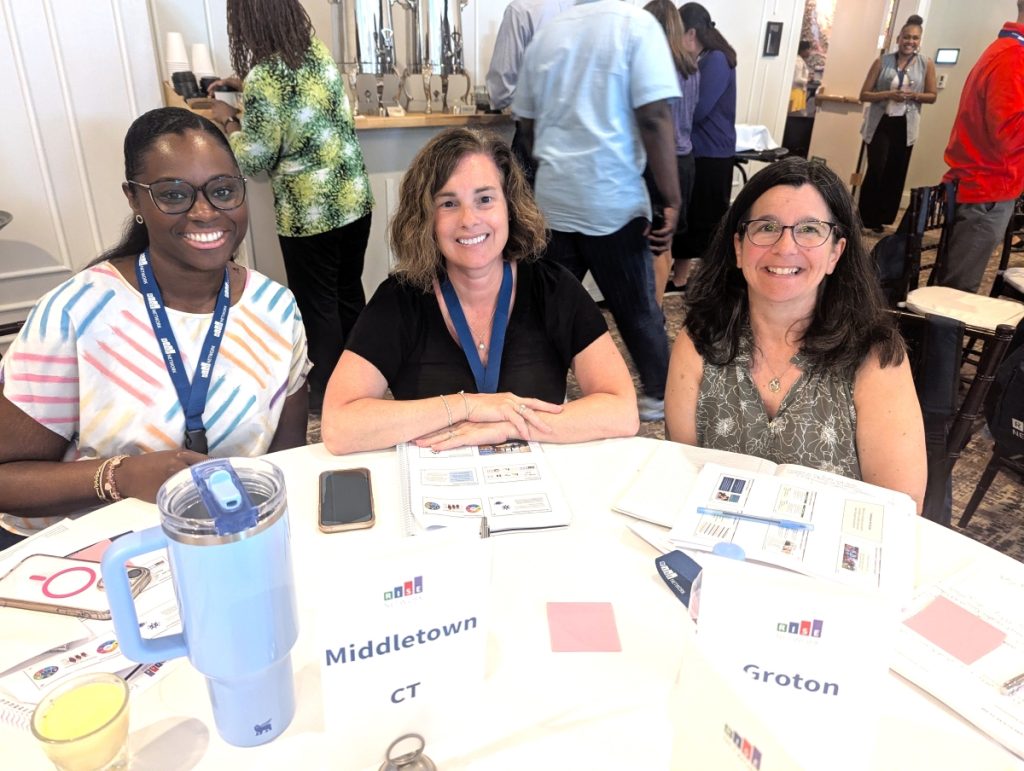

Following the Symposium, Worcester Tech joined the Grade 9 Focus Network (four other Worcester schools are also members of the network), and the RISE coach assigned to the school, Peter Lorinser, served as a collaborator and thought partner. “Being able to talk to Peter regularly helps me because he gives me a lot of insight on how to shape the ideas that I have,” Walker said. Together, they worked to adapt RISE practices for Worcester Tech, a vocational school. “At our school, you’ll see a lot of things that resemble what I learned at RISE, but modified to fit our infrastructure,” Walker explained.
He was inspired by the idea of on-track conferences – quarterly check-ins where students meet with a caring adult to discuss their goals, strengths, and growth areas – which was one strategy highlighted during the Grade 9 Symposium and demonstrated during a subsequent Focus Network visit to a RISE Core Network school. Adapting this to his school context, Walker and his team piloted the “Touchpoint Initiative,” Worcester’s version of on-track conferences. Administrators, faculty, and staff play an active role in this process, providing them with a unique opportunity to engage directly with students. Touchpoint conversations help strengthen student-teacher relationships and encourage students to reflect intentionally on their academic journey.
“The Touchpoint Initiative has been the biggest takeaway from our work with RISE,” Walker said. “It has been a phenomenal addition to the work we do, as it is one of the processes through which we gain the best data about our students.”
Other RISE-inspired activities that Walker instituted at Worcester Tech were a school‑wide data‑visibility campaign, building on-track language and culture, and shifting from one weekly First-Year Success Team meeting to three, with data review embedded into every agenda.
The student impact of these improvements is clear to see: ninth-grade on‑track rates leapt from 83 percent to 92 percent in one year, and have climbed to 94 percent in 2025.
Voices from the Symposium Educator Panel
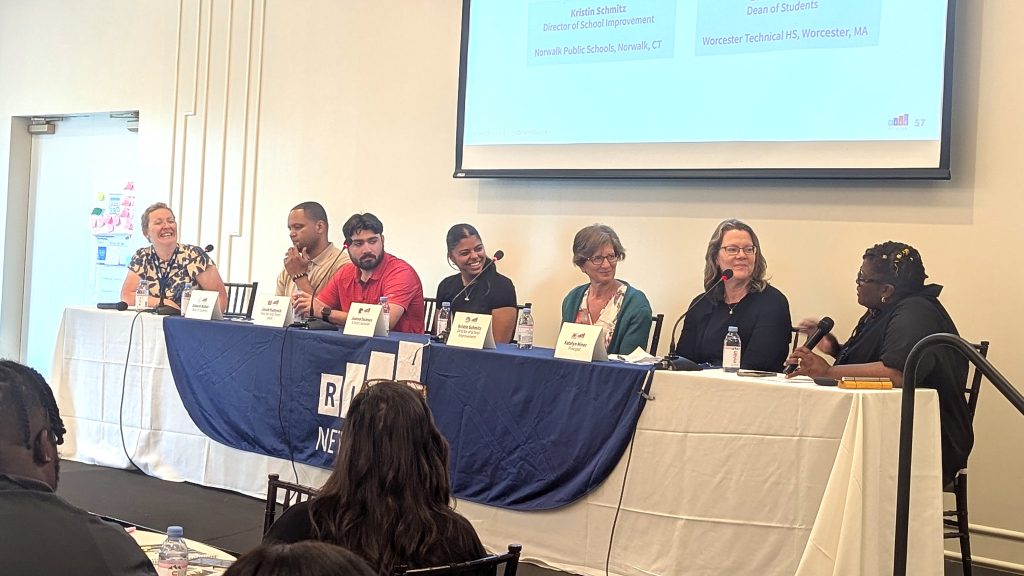
An annual highlight of the Symposium is a panel discussion with Network educators, who share their experiences launching Grade 9 success efforts and offer key learnings aligned to our Schools on the RISE framework. Worcester Tech’s Walker was joined by fellow RISE educators, who shared their unique perspectives on how providing strong support for students in the ninth-grade year sets them up for success:
- Kaitlyn Miner, Principal, Manchester High School: “Through ‘Red Hawk Talks’ (our version of on-track conferences), we get valuable information about student experiences, which changes teacher practice. These talks create an awareness and shared ownership of data and keep our eyes on the data all year.”
- Kristin Schmitz, Director of School Improvement, Norwalk Public Schools: “It’s never too late to intervene to get more students on-track. This year, for the first time, our school started a program right after the school year ended to help students earn a necessary half credit. Our approach is to be inventive, reflective, and look at data to see if it’s working.”
- Joanna DeJesus, School Counselor, Platt High School (Meriden): “Our kids aren’t numbers; they come with stories and experiences that inform the numbers, which we can uncover by speaking with eighth-grade counselors. All of this helps in connecting the quantitative and qualitative data to ensure we’re providing holistic support for students.”
- Jacob Kudysch, Teacher Team Lead, Brien McMahon High School (Norwalk): “It is statistically shown that ninth grade is a critical point for students, in terms of dropout rates and long-term success. Being able to work with the RISE team to provide really targeted support at that critical point makes the work very meaningful.”
During the panel, Walker shared the First-Year Success Team (FST) approach at Worcester Tech: “We started by asking students, What do you need to make this a brave, safe, bold space? Collectively, the FST noticed that we weren’t celebrating students enough, so we built a culture of celebration. Every quarter, we recognized every student who had honors or perfect attendance, and we also found ways to acknowledge small wins, such as improved student behavior or more students staying after school for extra help. Now this culture of celebration and achievement has become normal for our students, and moving forward, this is something they will keep with them.”
Together, the panelists’ reflections reflected a shared truth: when schools center student voice, use data purposefully, and build intentional systems of support, ninth grade becomes not just a transition year, but a springboard for long-term success.
Breakout Sessions Provide Practical Playbooks
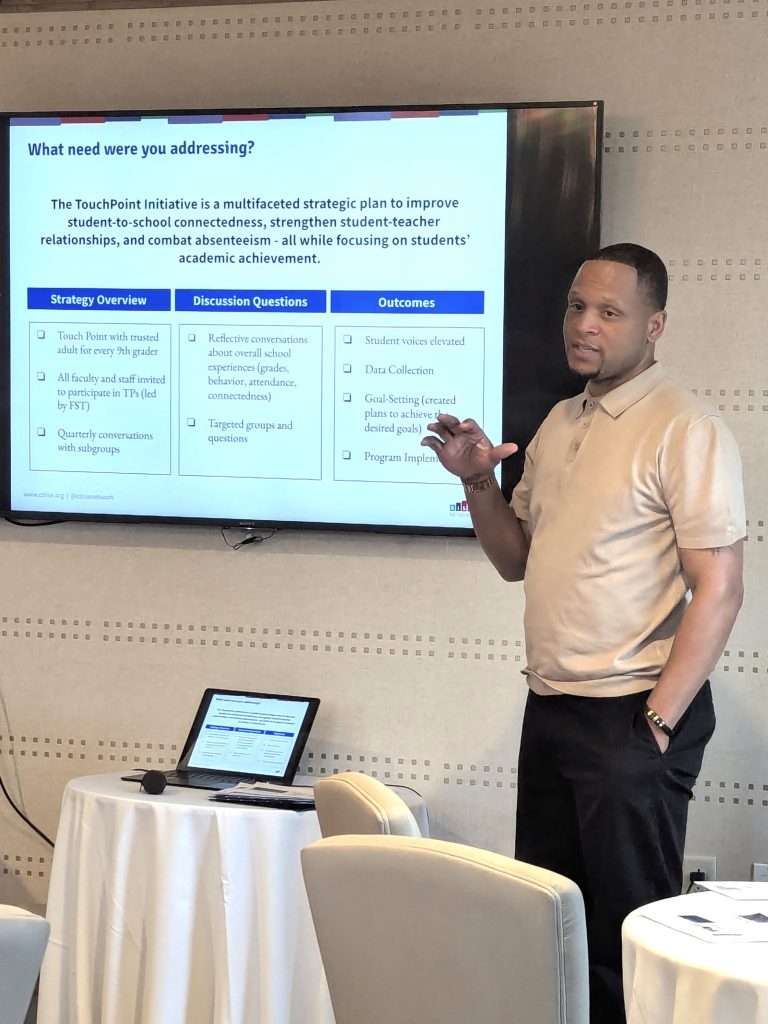
Symposium breakout sessions dug into the how of the various strategies shared during the educator panel. Walker co‑led a breakout focused on On‑Track Conferences alongside Staci Porch, Assistant Principal at East Hartford High School. Other sessions tackled on-track definition and data, Summer Bridge programs, Grade 9 teaming and scheduling, and attendance and student engagement.
Bill Harrison, a biology teacher from Hamden High School, attended Walker’s session, which he said both surprised and energized him. “I thought it was going to be a discussion of protocols, data, and looking for trends,” he said. “But it was really about meeting with students, looking at their data with them, and getting feedback that we can base changes upon, which is nice.”
From the breakout sessions to team planning and casual hallway chats, educators at this year’s Symposium were constantly learning from each other, sharing what works, adjusting in real time, and thinking about how to bring it all back to their students.
Results That Silence the Skeptics
One of Walker’s favorite stories of his work in Worcester came after his team implemented its campaign for data visibility and on-track culture. “People assume ninth graders perform the worst,” he said. “But when we shared our strong data, it muted everyone. Suddenly, everyone wanted to know what Grade 9 was doing and how they could model it across the other grades.”
Walker was particularly proud that the “Quarter‑two slide” (a common GPA dip in the fall and winter) disappeared after students were challenged to beat the statistic. “Our second quarter data improved from the first quarter because the students heard and understood this language–on–track, Quarter-two slide–and so it gave them something to work toward,” Walker said. “Something as small as creating on-track culture and shared language helps us to connect with our students and families. We set goals, achieved those goals, and we have exceeded the expectations of many folks.”
Growing the Network
The Symposium closed with an invitation: join the 2025‑26 Grade 9 Focus Network, learn about the RISE Data Hub, or explore other ways to stay connected to the RISE Network. As RISE’s Chief of Network Success, Nichelle Woodson, reminded the room, “Events spark ideas, but networks sustain the work.”
If Worcester Tech’s trajectory proves anything, it’s that a single nugget gathered at an event like the Symposium can plant the seed for a school‑wide shift. Imagine what could happen when more educators bring their voices – and their unique perspectives – to the table.
Interested in learning more about the Grade 9 Focus Network or other RISE learning communities? Reach out to Sam Purdy or visit ctrise.org/what-we-do. You can also learn about our first-ever Postsecondary Symposium, which will be held October 29-30, 2025.