

As part of the RISE Network’s ongoing tenth anniversary celebrations, we sat down with Co-Founder and Executive Director Emily Pallin to look back on the organization’s first decade of education network improvement and imagine the possibilities that lie ahead for RISE’s growing network community. This is the first in a series of blog posts featuring reflections from RISE co-founders.
Our conversation has been lightly edited.
Alexandra Broin: Take us back in time to the launch of RISE in 2015. What motivated you and the other co-founders (Barbara Dalio, Bob Hughes, and Andrew Ferguson) to initiate the work?
Emily Pallin: As we were envisioning RISE, we wanted to create a community built with educators, for educators. We set out to create a network of schools working together to reimagine the high school experience and support far better and more equitable student outcomes. From our very first exploratory conversations with schools, we were motivated by educators’ drive and desire to improve. That’s why we all do this work! It’s frustrating to feel stuck in a rut or like outcomes are plateauing — that’s when we need partners to turn to for ideas and inspiration. RISE could provide that community for school partners and help to address the critical issues educators were bringing to the table and spotting in the data.
While every school is unique, we also knew — from the research and our collective experience — that there were common pain points: student transition to and beyond high school, a lack of timely and actionable information, and barriers to collaboration. We used those as the starting point for our work; they became the key ingredients we focused on for our network improvement model.
Knowing the ingredients, however, was only step one. Figuring out how to put it all together was the big question.
We didn’t have all of the answers. But we knew where to turn to next: the talented and passionate teachers, principals, and school counselors who shared our goal and were doing similar work in neighboring communities.
Professional learning communities and conferences were not new, but they didn’t consistently yield real results for students. Our hypothesis was that if we reimagined and refocused these common ways of bringing educators together, we could discover and co-create solutions to the really thorny and complex challenges they faced.
We also believed that the people best suited to facilitate the learning, problem-solving, and innovation that would become the heart of our model were the educators themselves. Everything we’ve built over the years has grown from this premise.
And our recipe has really resonated with schools.
AB: Continuing with the recipe metaphor, I’d love to hear more about those ingredients. Shall we stay in the kitchen?
EP: I love to bake. Let’s do it.
AB: Looking back on the past ten years, educators in the RISE Network have shared stories that speak to the enduring power of the deep, trusting relationships they’ve built with others across the network. It’s clear that relationships were a priority from the get-go. How did this ingredient make it into the recipe?
EP: We wanted RISE to look, feel, and be different from other structures that weren’t moving the needle on student outcomes. Our first convenings were very much focused on data and the results we wanted to see: all ninth-graders on track, every senior graduating on time, and all students feeling confident and fulfilled by their postsecondary plans.
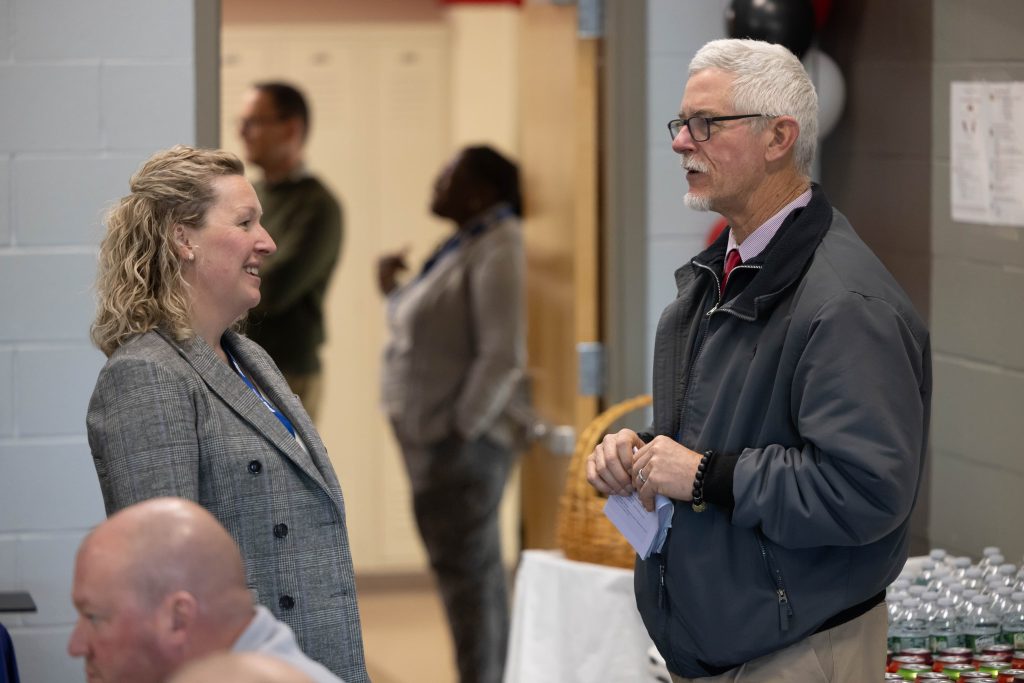
That said, education is deeply human-centered work. Asking educators to honestly reflect on what was most vexing to them, to pinpoint with colleagues from other schools and districts their greatest struggles, requires vulnerability. We probably underestimated at the outset what it meant for educators to transparently share their data and talk candidly about what was keeping them up at night. It requires so much trust. To create space for those conversations, we had to invest in building a wonderful community where partners are deeply invested in student success at their school and across the network.
In a session, I’m regularly in awe when an educator will chime in and say: “We’re really struggling with attendance,” or “How can we better support our workforce-bound students?” That shows such humility and a commitment to better supporting all students.
And I’m equally inspired when another educator from a different school will say: “We adopted a check-in/check-out system that’s really improved attendance levels. Let me get your email and I can share some templates with you and we can set up time to connect.”
AB: Did the process of building deep, authentic relationships slow you down?
EP: Not at all! It didn’t take long to facilitate these new connections, friendships, and long-lasting partnerships. We’re all doing really hard and important work, and it’s uplifting when you have partners in other schools who are cheering you on, sharing resources, talking vulnerably about real challenges.. Educators found network discussions to be different, maybe a little uncomfortable at first, but ultimately really refreshing. I get chills every time I hear about principals calling one another in a tough moment, or educators visiting each other to observe events or lessons — and these examples happen all the time!
One thing that’s helped is that we try to be asset-based in everything we do. We didn’t just ask about challenges. We encouraged educators to share their successes, too. What’s going well? What are you most proud of? Our message to educators was: When you figure something out, don’t hold it close. Share it with everyone!
The generosity of spirit we saw from educators was and continued to be really inspiring for our team and partners. When educators discovered something that worked for their students, they were so excited to share it with their colleagues, who then adapted successful strategies in other school communities. One educator’s success became another’s and then another’s, and so on.
AB: That sounds a lot like the RISE model today. What, if anything, has changed in your recipe over time?
EP: Very little and also everything!
Why and how we approach network and school improvement doesn’t feel altogether different than what we envisioned when we first created RISE.
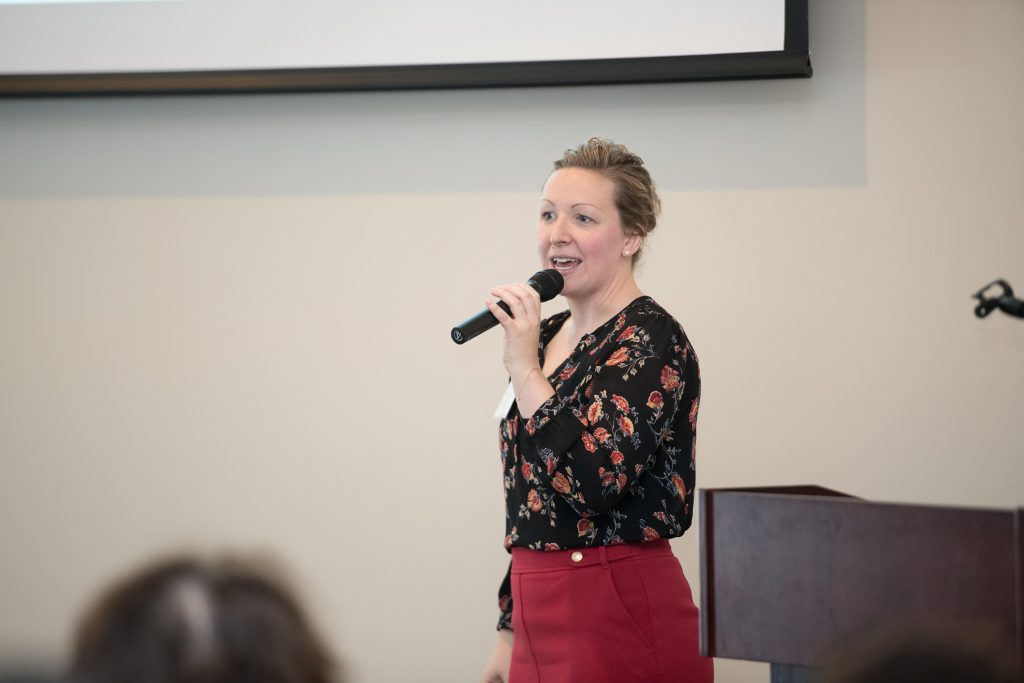
We’re still focused on cultivating really close ties between educators, for example, but our network has grown a lot. Back then, we were thinking about how to coordinate educators across five schools. Today, we’re talking about dozens and dozens of schools across states, who are reaching many more students. Our first conference was 30 educators in a room; next month, we’ll have more than 200 educators coming from multiple states.
We’ve organically evolved into this vibrant, growing network working together to do better for each and every kid, in each and every school. It’s everything we hoped for, and it feels really different than the early days.
AB: Speaking of students, I’m curious how RISE’s relationship-centered approach plays out in the day-to-day experiences of high schoolers across the network. We know that many adolescents are struggling with sizable mental health challenges, characterized as “unprecedented” and “uniquely hard to navigate” in a recent government bulletin.
How does RISE’s model help? Have you had to shift your approach to reflect the needs of teenagers today?
EP: Kids have to feel connected to school to be successful — that’s always been true. We work intentionally to foster that sense of connection by ensuring there is a focused and heightened level of care and attention for individual kids across everything we do. Whether it’s the data we review alongside school improvement teams or shared improvement strategies we bring to the table, our orientation has and continues to be all about personalizing students’ high school experience.
When students enter high school, they don’t start from the same place, academically or in terms of their social-emotional development. Standard, cookie-cutter supports didn’t cut it in 2015, and they don’t cut it today.
Through simple, yet powerful routines, like on-track conferences, we support educators to really see and know their students. To understand what motivates them and where they may be experiencing struggles. To celebrate their successes, and get really concrete on the steps we can take to get or stay on track to graduation and postsecondary success. To notice when students have a pattern of absences or a dip in their grades, and the best way to support the student’s success. To understand their hopes and dreams for the future, and help them craft a postsecondary plan that will help them reach their goals.
In addition, we have always believed that we owe it to incoming ninth-grade students who’ve experienced difficulties in middle school to set them up for success from day one. Having a champion and someone in your corner to cheer you on and keep in touch is a critical way to make that happen. We like to think that everyone is going to find that person, but it doesn’t happen automatically for all kids. We have to be intentional. Our structures — as well as the incredibly talented On-Track Coaches and new Americorps On-Track Mentors we support — work to ensure students don’t slip through the cracks.
That proactive orientation, another hallmark of RISE from the beginning, is key. We know that when students start strong and have someone they can turn to when they encounter a roadblock, it’s a lot easier to navigate unexpected challenges and stay on track. That’s not to say there aren’t moments of struggle — there are! But the past ten years have shown us over and over again that educators are more empowered and able to respond when they have the information, tools, and community to support their efforts.
AB: Tell me more about which ingredients have changed and which have been consistent at RISE over the past decade?
EP: The volume of change ideas and innovations we’ve tested and learned from is immense — it’s actually a little overwhelming! Back in 2015, we could fit the work we were doing on a single slide in a presentation. There’s no way we could do that today. It’s incredibly exciting. Our aspirations are bigger than ever.
And while some of our focal areas have evolved, especially our expanded emphasis on postsecondary access and success, those shifts were born of our relentless and steadfast drive to improve. Is the work ever going to be done? No — we’re constantly learning and improving! That can feel frustrating and exhausting and also energizing and inspiring all at the same time. Once we’ve solved one thing, it’s onto the next. Or maybe the foundation beneath us shifts — like when we were navigating COVID as a network community — and we need to navigate new and unfamiliar terrain. As we have from the beginning, we keep solving new problems and always getting better.
Finally, I’m really proud that we continue to walk the walk. If we are asking school partners to always be improving and entrepreneurial and thinking outside the box, we’ve got to be doing that, too. And we are. From our data tools to the way we carefully plan and execute professional learning to the more targeted and customized ways we’re teaming up with school partners, our support has continued to grow, evolve, and improve.
AB: Thank you so much, Emily. We’ll dig into the role of data and technology in the RISE model as well as where you envision RISE heading over the next ten years in our next conversation.
EP: I can’t wait!